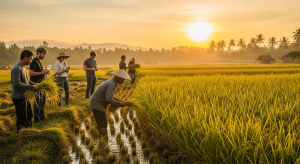
The Ultimate Route Guide for Exclusive Komodo Farm Tours
- Private Phinisi yacht charters serve as your floating base.
- Itineraries feature visits to coffee, cacao, and cashew plantations.
- Experiences are enriched by farm-to-table dining and local expert guides.
The Ultimate Route Guide for Exclusive Komodo Farm Tours
The air hangs thick and sweet, a heady perfume of roasting coffee beans and sun-baked cloves. From the teak deck of our private Phinisi schooner, the volcanic cone of an unnamed island pierces a turquoise sky. The gentle thrum of the engine is the only sound, save for the call of a sea eagle circling overhead. This is the other Komodo—a world away from the crowded tour boats at the national park’s main dock. It is a journey not just across the Flores Sea, but into the very soil and soul of the archipelago. For the discerning traveler, the true luxury of this region lies not only in spotting the famed dragons but in understanding the land that sustains them and the communities that have cultivated it for centuries. This is the promise of authentic, high-end agrotourism.
Beyond the Dragons: Redefining the Komodo Archipelago Experience
For decades, the narrative of this region has been dominated, understandably, by the Komodo dragon (Varanus komodoensis). The magnificent creatures of Komodo National Park, a designated UNESCO World Heritage site since 1991, are a powerful draw. Yet, to focus solely on them is to read only the first chapter of a much richer story. The next frontier in luxury travel here involves a pivot towards the archipelago’s vibrant agricultural heart. Exclusive Komodo farm tours are designed for the traveler who seeks a deeper connection, a more profound understanding of place. This is about tracing the journey of flavor from soil to plate, guided by the very people whose hands cultivate these exceptional products. The volcanic islands, part of the Ring of Fire, are blessed with incredibly fertile soil, creating microclimates that yield world-class coffee, cacao, vanilla, and an range of exotic spices. A proper journey here reveals how these commodities form the economic backbone for local communities, funding everything from traditional ceremonies to children’s education. It’s a more sustainable and immersive way to engage with the destination, turning a spectacular vacation into a meaningful cultural exchange. This is the core philosophy behind a well-executed komodo agro tourism itinerary.
The Labuan Bajo Launchpoint: Curating Your Private Itinerary
Every great expedition requires a well-planned departure. In Flores, that point is Labuan Bajo. Once a dusty fishing outpost, it has matured into a sophisticated hub, its harbor now home to a fleet of magnificent Phinisi schooners that represent the pinnacle of Indonesian maritime craftsmanship. This is where your journey begins, not by boarding a generic tour, but by meeting with a travel curator to finalize a bespoke route. The vessel itself is central to the experience. We’re talking about a privately chartered yacht, often with a crew of 6 to 12, a personal chef, and dive master, where charters can range significantly in price. You can explore a detailed breakdown in our Komodo Agrotourism Pricing & Cost Guide. The first stop on our curated route is not an island, but the bustling local market in Labuan Bajo itself. With our guide, we navigate the vibrant stalls, the air pungent with turmeric and galangal. Here, we don’t just observe; we procure. We select the freshest chilis, lemongrass, and torch ginger that will form the basis of our meals aboard the yacht for the next week. This act of provisioning sets the tone for the entire trip: it is hands-on, authentic, and deeply connected to the local foodways. It is the first step in a true farm-to-yacht experience.
Rinca and the Northern Flores Highlands: Coffee, Cloves, and Culture
While Rinca Island is a mandatory stop for its thriving dragon population—often more active and accessible than on Komodo Island—our route uses it as a gateway to the agricultural treasures of the Flores mainland highlands. A private vehicle waits for us after our morning trek with the dragons, ready to transport us 130 kilometers east to the cool, mist-shrouded hills around the town of Ruteng. This is the heart of Flores coffee country. Here, at altitudes exceeding 1,200 meters, smallholder farmers cultivate some of Indonesia’s finest Arabica beans. We bypass the commercial processing plants for an arranged visit to a family-run farm. Over 95% of the coffee here is grown on plots of less than two hectares, our local guide explains as we walk among the coffee cherries, which are a brilliant crimson during the May to September harvest season. We participate in the pulping, washing, and drying of the beans before sitting down with the family for a traditional roasting over an open fire, the beans cracking and popping as they release their sublime aroma. The experience offers a profound appreciation for the cup you enjoy each morning. This region is also rich in cloves and candlenut, spices that once drew European traders to these very islands centuries ago. This type of deep dive into a specific agricultural product is a hallmark of The Definitive Komodo Agrotourism Guide.
The Southern Route: Mulese Cacao and Manggaraian Weaving
From the highlands, our route navigates south, exploring a different facet of the island’s agricultural wealth: cacao. The Mulese Peninsula, a less-trafficked area south of Labuan Bajo, is gaining a reputation among chocolatiers for its high-quality, organically grown cacao beans. Through our exclusive local contacts, we gain access to a small cooperative where we can witness the entire post-harvest process. The journey of a cacao pod is fascinatingly complex. We see the large pods split open to reveal the white, sweet pulp-covered beans, which are then fermented in wooden boxes for up to seven days. This fermentation step is critical; it is where the precursors to the rich chocolate flavor develop. Afterward, the beans are sun-dried on large mats for another week. We are invited to taste at each stage, from the tangy, lychee-like flavor of the raw pulp to the intensely bitter, complex notes of the finished, dried bean. This agricultural enterprise is intrinsically linked to cultural preservation. The income generated from high-quality cacao sales helps support traditional Manggaraian arts, most notably the intricate *ikat* weaving. Visiting a weaving village, we see how natural dyes from indigo and morinda root are used to create remarkable textiles whose patterns tell ancient stories. This is where tourism becomes a force for good, directly supporting the continuation of a priceless cultural heritage.
Island Harvests: Cashew Plantations and Pearl Farming
The beauty of exclusive komodo farm tours is their flexibility, allowing for exploration of the archipelago’s diverse island ecosystems. Our Phinisi charts a course west towards the larger island of Sumbawa, whose drier climate is ideal for cashew cultivation. We anchor in a secluded bay and go ashore to visit a local plantation. Many are surprised to learn that the cashew “nut” is actually a seed that grows at the bottom of a fruit, the cashew apple. The harvesting and processing are labor-intensive. Each seed is encased in a double shell containing a caustic, toxic resin that can cause severe skin burns. We watch skilled workers expertly roast the shells to neutralize the resin before cracking them open by hand to extract the precious kernel. It’s a humbling sight that instills a new respect for this common snack. The final stop on our agricultural route takes us from the land to the sea. The clean, nutrient-rich waters of the Komodo archipelago are home to some of the world’s most prestigious South Sea pearl farms. A private tour reveals the incredibly delicate art and science of pearl cultivation. We learn how technicians carefully implant a nucleus into Pinctada maxima oysters, which are then tended to in underwater nurseries for two to four years. The result is a pearl with unparalleled luster and size, with a single, perfect specimen fetching upwards of $10,000 on the international market. As noted by Indonesia’s official tourism portal, the marine biodiversity here is simply staggering, making it a perfect environment for this delicate form of aquaculture. You can learn more about the region at indonesia.travel.
Quick FAQ on Exclusive Komodo Farm Tours
What is the best time of year for a Komodo agrotourism trip? The dry season, from April to October, is ideal. It offers the calmest seas for sailing and aligns perfectly with key harvest periods, including the peak coffee cherry picking season which typically runs from May through September.
Are these tours suitable for families? Absolutely. The bespoke nature of private charters means itineraries can be fully customized. While adults engage in a coffee tasting, children can learn to make coconut oil or visit a local sea turtle hatchery. It’s an educational and engaging experience for all ages.
How much lead time is needed for booking? For a truly customized journey on a premium Phinisi with the best guides, we strongly recommend booking 6 to 9 months in advance. The top vessels and local experts are in high demand, particularly during the peak season from July to August.
Is the itinerary only focused on farms? Not at all. These agricultural visits are curated highlights woven into a classic luxury Komodo itinerary. You will still enjoy world-class snorkeling on pristine reefs, watch the sunset over Padar Island, and of course, have private, ranger-led encounters with the Komodo dragons. The farm tours add a unique layer of depth and authenticity to the quintessential Komodo experience.
A journey through the Komodo archipelago can be so much more than a wildlife-spotting excursion. By venturing into its fields, plantations, and workshops, you engage with the region on a more intimate and meaningful level. You connect with the land, the people, and the flavors that define this extraordinary corner of Indonesia. To begin crafting your own journey into the agricultural heart of the archipelago, explore the possibilities with komodo agro tourism. They possess the local connections and logistical expertise to transform this guide into your reality. When you are ready to secure your private charter, you can book your Komodo Agrotourism adventure here.