Choosing the Best Eco-Luxury Farm Visit in Komodo National Park
- Sustainability: Prioritizes regenerative farming, water conservation, and minimal environmental impact.
- Exclusivity: Offers private tours, bespoke culinary experiences, and intimate access to working farms.
- Authenticity: Connects travelers with local farmers, traditions, and the unique terroir of the Flores islands.
Choosing the Best Eco-Luxury Farm Visit in Komodo National Park
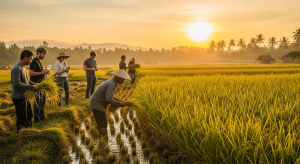
The air is thick with the scent of roasted coffee and damp, volcanic earth. A gentle breeze rustles through the broad leaves of a moringa grove, carrying the distant sound of waves against the shore. You are not on a crowded tour boat jostling for a photo of a dragon. Instead, your hands are stained with the soil of Flores, having just helped harvest the very beans that are now crackling over a fire, prepared by a farmer whose family has worked this land for five generations. This is the new vanguard of travel in the archipelago, a considered and deeply personal encounter that defines the ultimate komodo agro tourism experience.
Beyond the Dragons: The Rise of Regenerative Travel in Flores
For decades, the narrative of this region has been dominated, understandably, by the Komodo dragon. As the world’s largest lizard, Varanus komodoensis is a magnificent draw, attracting over 180,000 visitors annually before 2020. This influx, however, placed immense pressure on the fragile ecosystem of the UNESCO World Heritage site, which spans 1,733 square kilometers of terrestrial and marine environments. In response, a more thoughtful travel philosophy is taking root. Discerning travelers, and indeed the Indonesian government, are pivoting towards a model of high-value, low-impact tourism. The focus is shifting from volume to value, from fleeting sightseeing to meaningful participation. This is where the concept of an eco-luxury farm visit in Komodo finds its purpose. It represents a deliberate choice to invest in the region’s future, supporting conservation not just through park fees, but by empowering the local communities who are the ancestral stewards of this land. These experiences are designed to be regenerative, leaving the place and its people better off. They offer a compelling alternative for those who have already seen the dragons or wish to complement that adventure with something more profound and restorative.
Defining “Eco-Luxury” in the Komodo Archipelago
The term “eco-luxury” is often misappropriated, sometimes amounting to little more than a bamboo straw in your cocktail. Here in the Lesser Sunda Islands, however, it signifies a far deeper commitment. “Eco” is not an aesthetic; it’s a closed-loop operational ethos. On a premier farm property, this means 100% of power is generated by solar arrays, all water is sourced from atmospheric generators or meticulously managed wells, and wastewater is treated and reused for irrigation. It means a zero-plastic policy is not a goal but a baseline, and food waste is composted to enrich the very soil that produces the next harvest. The “luxury” component is equally redefined. It is not about imported marble or ostentatious displays of wealth. Luxury here is the profound privilege of privacy, space, and access. It is a private guide, an expert in both local ecology and culture, who is your sole companion. It is a chef who designs a multi-course tasting menu based on what you helped harvest that morning. It is the silence of a secluded bay, broken only by the call of a sea eagle. According to Maria Sitompul, a Flores-based sustainable development consultant I spoke with, “True luxury for our guests is connection. They want to understand the story of their food, see the process, and know that their visit directly contributes to a family’s livelihood and the preservation of biodiversity.”
What to Expect from a Premier Farm Stay: A Day in the Life
Your day does not begin with an alarm, but with the scent of fresh-brewed Flores coffee, grown just meters from your private bungalow. After a light breakfast of tropical fruits and local honey, you join your host for a walk through his terraced farm, where he explains the delicate art of cultivating vanilla orchids, a crop that requires hand-pollination and can fetch over $250 per kilogram on the international market. You might spend the late morning learning the process of harvesting and sun-drying cashews, a major export for the region. Lunch is an interactive affair: a cooking class in an open-air kitchen where you learn to prepare a traditional ikan bakar (grilled fish) with sambal made from chilies grown on-site. The afternoon offers a choice. Perhaps a guided trek into the surrounding forest to identify endemic plants used in traditional medicine, or a visit to a neighboring coastal village to see a sustainable pearl farming operation, a delicate practice that requires pristine water conditions. As evening approaches, you settle in for a private dinner under a canopy of stars so brilliant they seem almost within reach, a testament to the lack of light pollution just 50 kilometers from the bustle of Labuan Bajo. For a comprehensive look at what these itineraries entail, The Definitive Komodo Agrotourism Guide offers an excellent deep dive into the possibilities.
Vetting Your Host: Key Questions to Ask Before Booking
The growing interest in authentic travel has unfortunately led to a rise in “greenwashing,” making due diligence more critical than ever. Choosing the right eco-luxury farm visit in Komodo requires asking pointed questions. Before committing, a discerning traveler should inquire directly with the operator or their agent. First, ask about their resource management: “What is your water source, and how do you manage wastewater?” A reputable eco-farm will have a clear, transparent answer about their systems. Second, probe their community integration: “What percentage of your staff is from the local village, and are they in management positions?” A truly sustainable operation invests in local talent, providing training and career paths, not just entry-level jobs. Third, clarify their agricultural practices: “Is this a genuine working farm, or a demonstration plot for tourists?” Authenticity is key; you want to experience a living agricultural system, not a theme park. Finally, understand the financial flow: “How much of my tour cost directly benefits the local community?” While pricing can be complex, a transparent operator can break down how funds support wages, community projects, or conservation levies. A detailed breakdown of what to expect financially can be found in our Komodo Agrotourism Pricing & Cost Guide, which helps set a benchmark for value and impact.
The Culinary Dividend: From Volcanic Soil to Your Plate
The unique volcanic geology of the Flores region creates a terroir that is as distinctive as any wine appellation in France. The soil is rich in minerals, producing fruits, vegetables, and spices with an unparalleled intensity of flavor. An eco-luxury farm visit is, at its heart, a culinary journey. You are not merely a consumer but a participant in a food story that begins in the earth. You will taste the difference between coffee beans processed using the wet-hulled “giling basah” method, a technique largely unique to Indonesia, and those that are naturally processed. You will experience the floral, smoky notes of vanilla cured on-site, a world away from the synthetic extract in your pantry. According to the official portal indonesia.travel, the culinary scene is a core part of the region’s tourism strategy. On these farms, that strategy is hyper-localized. The menu is the day’s harvest. The fish on your plate was caught by a local fisherman that morning using sustainable line-fishing methods. The vibrant greens in your salad are from a hydroponics system that uses 90% less water than traditional agriculture. This is the ultimate expression of farm-to-table, a philosophy that is not a trend here, but a centuries-old way of life, now refined for the luxury traveler.
Integrating Your Farm Visit with a Wider Komodo Itinerary
An agricultural deep-dive does not mean forgoing the region’s other wonders; it enhances them. A well-structured itinerary seamlessly blends the two. We recommend a 7-day, 6-night journey for a complete experience. Dedicate the first three days to the classic Komodo circuit: a private charter to Padar Island for the iconic sunrise hike, a guided encounter with the dragons on Rinca or Komodo Island, and at least two days dedicated to diving or snorkeling at world-class sites like Manta Point and Batu Bolong, where water temperatures hover around a pleasant 28°C. Following this active adventure, transfer to your farm stay for the next two days. This placement in the itinerary allows for a period of decompression and cultural immersion, a slower-paced and more contemplative experience after the excitement of the marine park. The final days can be spent exploring the mainland of Flores, visiting traditional villages, or simply relaxing before your departure from Labuan Bajo. This structure provides a holistic view of the region, connecting the celebrated wildlife with the human culture that sustains it. You can explore and Book Komodo Agrotourism packages that follow this balanced and enriching model.
Quick FAQ on Komodo Farm Stays
Is an eco-luxury farm visit suitable for families? Absolutely. In fact, it is an exceptional educational experience for children, offering hands-on learning about food origins, sustainability, and local culture far more impactful than a textbook. Most high-end operators can tailor activities for various age groups.
What is the best time of year to visit? The dry season, from April to November, offers the most pleasant weather with clear skies and calm seas. This period also coincides with the peak harvest season for many crops, making it an ideal time for an agrotourism experience.
How does this experience directly support the local community? Premier farm stays prioritize direct local employment, often paying wages significantly above the regional average of around IDR 2.5 million per month. They purchase produce and seafood from neighboring families, fund community projects like schools or clean water access, and help preserve traditional farming techniques.
How physically demanding are the farm activities? Activities are tailored to guest preferences and fitness levels. They can range from a gentle walk through a vanilla plantation to more strenuous treks. All activities are optional, and relaxation is always a perfectly acceptable choice.
Choosing an eco-luxury farm visit is more than a vacation; it is an investment in a more sustainable and equitable future for a globally significant destination. It is about trading the transient thrill of a photograph for the lasting enrichment of a genuine human connection and a deeper understanding of this remarkable corner of the world. By engaging with the land and its people, you become part of the Komodo story, not just a spectator. To explore the curated agricultural journeys that are redefining travel in this region, visit our partners at komodo agro tourism.