Komodo Agrotourism Comparison & Alternatives
Morning mist lifts over the terraced hillsides of Flores. The aroma of brewing Manggarai coffee drifts from a nearby family home. This moment defines a different kind of journey.
Komodo Agrotourism: The Deep Roots of Flores Engagement
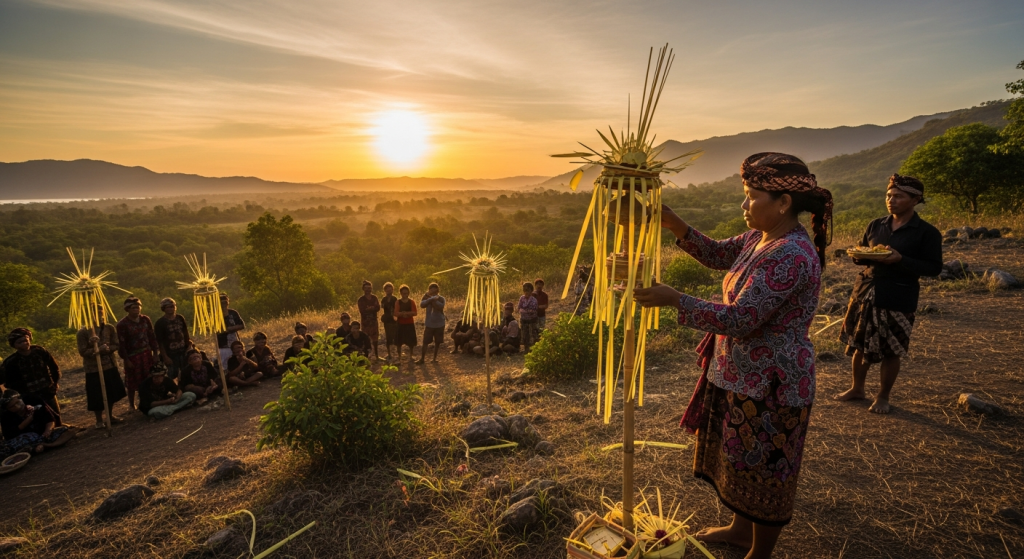
Komodo Agrotourism redefines the journey to East Nusa Tenggara. It moves beyond the iconic Komodo National Park, extending the narrative into the rich agricultural landscapes of mainland Flores. Here, travelers connect directly with the source – the land and its people. This approach offers farm-stay experiences within traditional Manggarai communities, often involving stays in village homes constructed from local timber and bamboo. Guests participate in daily life, observing or joining activities like coffee bean processing or rice planting. The concept, formally established in 2018, partners with over 30 local families across five villages, including areas near Wae Rebo and Ruteng, ensuring a direct economic contribution to these communities.
The focus remains on authenticity and sustainability. Operators adhere to a strict Agrotourism Ethical Operator (AEO) certification, ensuring fair wages and environmental stewardship. For instance, the coffee plantations around Bajawa and Ruteng, situated at altitudes exceeding 1,200 meters above sea level, cultivate Arabica and Robusta varieties using traditional, organic methods passed down through generations. Travelers learn the journey from bean to cup, from picking ripe cherries to sun-drying and hand-roasting. A typical farm-stay lasts between two to four days, allowing for a slower pace of discovery, contrasting sharply with the often-hurried itineraries of conventional tourism. This direct engagement fosters a deeper understanding of Manggarai culture, where hospitality is a cornerstone. The Manggarai language, distinct from Bahasa Indonesia, features prominently in daily interactions, offering an insight into local heritage. Visitors observe the intricate process of ikat weaving, a tradition where complex patterns are dyed onto threads before weaving, with each piece taking weeks to complete. This form of agrotourism represents a conscious choice for those seeking profound, responsible travel.
Labuan Bajo’s Resorts: Comfort at a Distance
Labuan Bajo, the gateway to Komodo National Park, offers a range of luxury resorts. These establishments provide high-end amenities: infinity pools overlooking the turquoise sea, air-conditioned suites, and international dining options. Properties like Ayana Komodo Resort, opened in 2018, or Plataran Komodo Beach Resort, offer private beach access and dedicated boat services for island excursions. A typical night at a premium resort averages around $300-$500 USD, providing a comfortable base for exploring the region’s marine wonders. Guests appreciate the convenience of organized tours to Rinca Island or Padar Island, departing directly from private jetties. The focus here lies on relaxation and seamless access to the natural beauty of the Komodo archipelago.
However, this comfort often comes with a degree of separation from local life. Interactions with Manggarai culture largely occur through hotel staff or brief encounters during organized day trips. The economic benefits, while present, often filter through larger corporations rather than directly into the hands of local farmers or artisans. These resorts cater to a desire for pristine environments and luxury services, but they do not actively facilitate deep dives into agricultural practices or traditional community structures. While excursions to local markets are sometimes offered, they typically last only an hour or two, providing a superficial glimpse rather than participatory engagement. The distance from the agricultural heartland of Flores means an absence of direct farm activities or prolonged stays within village settings. For travelers prioritizing direct cultural immersion and a hands-on understanding of local livelihoods, the resort experience remains a comfortable, yet distinctly peripheral, option. The carbon footprint of operating these larger resorts also presents a consideration for environmentally conscious travelers.
Liveaboard Expeditions: The Call of the Ocean
Liveaboard expeditions represent a quintessential Komodo experience, focusing almost exclusively on the marine environment and island hopping within Komodo National Park. These vessels, ranging from traditional phinisi boats to luxurious yachts, sail through the sapphire waters, allowing guests to visit Komodo Island for dragon encounters, snorkel with manta rays at Manta Point, and hike to the panoramic viewpoints of Padar Island. Trips typically span three to five days, with all meals and activities onboard. Operators like SeaTrek Sailing Adventures, active since 1993, offer well-regarded itineraries. Prices vary significantly, from $200 per person per night on a budget boat to over $1,000 per person per night for a high-end private charter. The allure is the unparalleled access to the UNESCO World Heritage Site’s biodiversity, both above and below the water.
Yet, the very nature of a liveaboard dictates a specific kind of journey, one that inherently bypasses sustained interaction with the agricultural and cultural heartland of Flores. Landings are brief, focused on specific natural attractions or wildlife viewing. While a stop at a fishing village might occur, it offers a fleeting glimpse rather than an opportunity for meaningful cultural exchange or participation in daily life. There is no traditional weaving demonstration, no coffee harvesting, no shared meals with a local family in their home. The journey remains confined to the sea, providing a spectacular, but ultimately isolated, perspective. The environmental impact of waste management and fuel consumption for the approximately 300 liveaboards operating in the park is also a relevant consideration. For those seeking to connect with the land, its people, and their agrarian traditions, a liveaboard serves a different purpose, prioritizing marine exploration over terrestrial cultural immersion. Komodo National Park itself, established in 1980, centers on conservation of its unique ecosystem, not agrotourism.
Standard Flores Land Tours: A Glimpse, Not a Living
Standard Flores land tours often follow established routes, connecting key attractions like the multi-colored crater lakes of Kelimutu, the traditional village of Wae Rebo, and the spiderweb rice fields near Ruteng. These tours typically involve private car hire with a driver-guide, moving quickly between locations over several days. A common itinerary might cover Labuan Bajo to Moni, including stops at various viewpoints and cultural sites. For example, a drive from Labuan Bajo to Wae Rebo takes approximately 3-4 hours, followed by a 1.5-hour trek. These tours offer a structured way to see the geographical highlights of Flores, often accommodating groups of 4-8 people. Tour operators, such as Flores XP, provide pre-arranged lodging and meals, streamlining logistics for travelers.
While these tours visit traditional villages like Wae Rebo, the interaction is often limited to a formal welcome ceremony and a brief walk through the village, lasting only a few hours. There is little opportunity for hands-on participation in daily activities or extended stays within a family home. The emphasis remains on sightseeing and ticking off landmarks rather than genuine cultural exchange or contributing directly to local livelihoods beyond entrance fees. The experience, while informative, can feel somewhat detached, a curated observation rather than a shared living. Visitors may purchase local crafts, but the process of creation or the stories behind the artisans are often conveyed through a guide rather than direct interaction. This contrasts with the Komodo Agrotourism model, where the traveler becomes a temporary resident, engaging directly in coffee processing or learning weaving techniques from the practitioners themselves. Standard tours, while efficient for covering ground, often lack the depth of connection that arises from participatory, community-focused travel. Wae Rebo, designated a UNESCO World Heritage cultural site in 2012, sees approximately 15,000 visitors annually, many on such brief tours.
The Komodo Agrotourism Advantage: A Matrix of Meaningful Engagement
Komodo Agrotourism stands apart by offering a profound matrix of engagement, directly addressing the desires of the sustainable-conscious traveler. It shifts the focus from observation to participation, from transient visits to meaningful stays. Travelers choosing Komodo Agrotourism contribute directly to local economies; an estimated 60-70% of program fees directly support host families and community projects, significantly higher than the indirect benefits from resorts or mass tours. This model fosters genuine cultural exchange, allowing guests to live alongside Manggarai families, sharing meals, stories, and daily routines. In a coffee village near Ruteng, for example, guests wake to the sounds of roosters, join the family for a breakfast of local staples, and then head to the fields to pick coffee cherries during harvest season (typically May to September). This isn’t a staged performance; it is life.
The ethical operator certification (AEO) ensures transparent, fair practices, a crucial element for discerning travelers. This certification covers aspects from environmental protection in agricultural practices to equitable distribution of tourism revenue. Furthermore, the opportunity to learn traditional crafts, such as the intricate Manggarai ikat weaving, provides a tangible skill and a deeper appreciation for local artistry. A weaving workshop might last several hours, teaching basic techniques and the cultural significance of patterns. This direct, hands-on learning is absent in other tourism formats. Instead of merely seeing Komodo National Park, Komodo Agrotourism extends the journey to understand the human landscape of Flores. It is a commitment to slow travel, where the journey itself, the connections made, and the shared experiences become the ultimate luxury. This approach aligns with the principles of responsible tourism, emphasizing cultural preservation and environmental sensitivity. Travelers return not just with photographs, but with personal narratives woven into the fabric of Flores life. Explore the authentic heart of Flores with Komodo Agrotourism.
To discover more about our unique farm-stay programs and how you can contribute to sustainable community development in Flores, visit our homepage. Learn about our ethical certifications and the impact of your journey on local families. For details on specific coffee-growing regions, explore our coffee plantation experiences. We invite you to connect deeply with the land and people of Manggarai through Komodo Agrotourism.