Best Time for Komodo Agrotourism — Insider Guide
The optimal period for Komodo agrotourism generally spans the dry season, from May through September, offering stable weather for travel and farm activities. However, specific interests dictate the truly best timing:
- Coffee Harvesting: Target June to August for peak cherry picking in Manggarai.
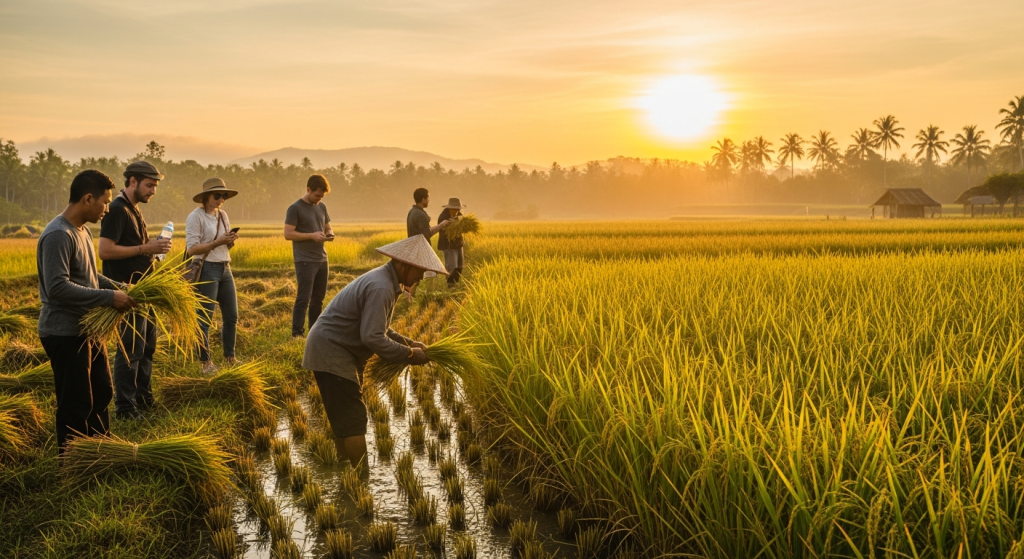
- Rice Cultivation: Observe planting in November-December and harvesting in April-May.
- Community & Weaving: Year-round engagement, with fewer crowds during the shoulder months of April, October, and November.
The air above Labuan Bajo holds a particular quality in the early morning, a blend of sea salt and distant woodsmoke, signaling the start of another day. Understanding this rhythm, and the broader seasonal pulse of Flores, defines the depth of a Komodo agrotourism visit.
The Dry Season: Optimal Conditions for Exploration and Agrotourism Access (May-October)
From May through October, Flores experiences its dry season, characterized by consistently clear skies and minimal rainfall. This period is often considered the most straightforward for general travel, particularly for navigating the Komodo National Park islands. Average daily temperatures hover between 28-32 degrees Celsius, with humidity levels comfortably lower than during the monsoons. Boat transfers to Rinca and Komodo islands operate with high reliability, offering excellent visibility for marine life around the reefs. Komodo National Park records approximately 180,000 visitors annually, with a significant majority arriving during these dry months. The trails on Padar and Komodo remain firm and accessible, leading to expansive savannah views.
For agrotourism, the dry season offers distinct advantages. Access to remote Manggarai villages, like Wae Rebo or Todo, becomes significantly easier as unpaved roads are less prone to mudslides. The local farmers often engage in post-harvest activities for specific crops or prepare fields for the next planting cycle. While peak coffee harvesting concludes by August in many higher-altitude areas, the drying and processing of beans continue well into September and October. This allows visitors to observe traditional sun-drying methods on large mats, often in village courtyards. Water levels in the rice terraces are managed through intricate irrigation systems, displaying varying shades of green as the crop matures. The absence of heavy rains means outdoor weaving demonstrations can be conducted without interruption, often under open-air pavilions. A direct flight from Jakarta to Labuan Bajo takes approximately 2 hours and 30 minutes, connecting travelers efficiently to this region’s seasonal rhythms.
Wet Season Realities: Agrotourism’s Lush Heartbeat (November-April)
As November arrives, the skies over Flores begin to gather, signaling the onset of the wet season, which typically extends through April. This period brings a dramatic transformation to the landscape, painting the hillsides in vibrant greens and replenishing the island’s waterways. Average monthly rainfall can exceed 200mm, particularly in January and February, sustaining the island’s rich biodiversity. While rain showers are common, they often occur in intense bursts, followed by periods of sunshine. Temperatures remain warm, averaging 26-30 degrees Celsius, accompanied by higher humidity. Travel to certain remote areas can become more challenging due to muddy roads, and boat schedules may experience occasional adjustments due to stronger winds or choppier seas.
However, for the discerning Komodo agrotourism traveler, the wet season offers unparalleled insights into the agricultural heart of Flores. This is the crucial period for rice cultivation; fields are meticulously prepared, seedlings are transplanted in November and December, and the terraces glow with young, vibrant green shoots. Coffee plants, having flowered around September-October, now bear green cherries that slowly ripen. While harvesting is still months away, observing the growth cycle provides a profound connection to the land. Weaving activities continue year-round, often becoming a more central indoor occupation during periods of heavy rain. The fewer tourist numbers – often a reduction of 30-40% compared to peak dry season – mean more intimate interactions with local communities. This period offers a chance to experience the island’s authentic, unvarnished rhythm. Many family homestays on Manggarai farms remain fully operational, providing genuine local lodging and culinary experiences even during the rain. The Komodo Agrotourism cooperative includes over 50 farming families across Flores.
Shoulder Seasons: The Savvy Traveler’s Window for Immersion (April-May & October-November)
The shoulder seasons, specifically April-May and October-November, present a compelling proposition for those seeking a nuanced Komodo agrotourism experience. These periods bridge the dry and wet seasons, offering a unique blend of favorable conditions and authentic local engagement. In April and May, the landscape retains a verdant lushness from the receding rains, yet the skies clear significantly, providing excellent visibility for both land and sea excursions. Average daily temperatures settle around 29-31 degrees Celsius, with humidity levels decreasing steadily. This timing often coincides with the tail end of the rice harvest in some areas, allowing visitors to witness traditional threshing and drying processes. For instance, in parts of Manggarai, the harvest can extend into early May, providing a tangible connection to the food cycle.
October and November, conversely, mark the transition from dry to wet. The land begins to green again after the long dry spell, and the first rains invigorate the coffee plants, leading to the crucial flowering stage. Observing coffee flowers, delicate and white, signaling the promise of the next harvest, is a truly special sight. Tourist numbers during these shoulder months are typically 15-20% lower than the peak dry season, translating to more serene experiences at popular sites and deeper interactions within farming communities. Flight and accommodation prices may also see slight reductions, offering value. This is a prime time for engaging with traditional weaving communities; the cooler, less intense climate is conducive to working with natural dyes and intricate patterns. Many local families welcome visitors to observe the craft of ikat weaving, a process that can take weeks or even months for a single textile. The Komodo Agrotourism initiative supports over 30 traditional weaving groups.
Coffee Cycle Calendar: Manggarai’s Aromatic Rhythms
Understanding the annual coffee cycle is central to appreciating Manggarai’s agrotourism. Flores coffee, particularly Arabica grown at elevations between 800 and 1,500 meters above sea level, follows a predictable rhythm. The flowering period typically occurs from September to November, triggered by the first rains after the dry season. These delicate white blossoms transform into green coffee cherries over the next few months. By March and April, these cherries begin to swell and change color, gradually ripening. The peak harvesting season for red cherries usually runs from June to August. During these months, local farmers manually pick ripe cherries, a labor-intensive process ensuring quality. A single coffee tree can yield up to 1-2 kilograms of green beans per year.
Visiting during the harvest allows travelers to participate directly in the picking, learn about selective harvesting, and observe the immediate post-harvest processing. This includes depulping, fermentation (for wet-processed beans), washing, and sun-drying on raised beds or patios. The drying process alone can take 7-14 days, depending on weather conditions. From September to December, the focus shifts to sorting, grading, and preparing the parchment coffee for hulling and roasting. Even outside the harvest, visitors can engage with the coffee story. During the wet season, the lushness of the plantations, with their shade trees like lamtoro or albizia, offers a different kind of beauty. Komodo Agrotourism partners with over 20 coffee farming cooperatives in the Manggarai region, ensuring ethical sourcing and community benefits. More information on Flores coffee can be found on Wikipedia’s entry on Indonesian coffee production.
Rice Terraces & Traditional Weaving: Seasonal Symbiosis in Flores
The agricultural calendar of Flores is profoundly shaped by its staple crop: rice. The iconic spiderweb rice fields of Cancar, or the terraced fields surrounding Wae Rebo, tell a story of seasonal dedication. Planting generally commences with the first significant rains in November and December. During this period, the fields are meticulously prepared, often using traditional buffalo-drawn plows, and young rice seedlings are transplanted by hand. The vibrant green of the young rice shoots dominates the landscape through January, February, and March. As the dry season approaches, typically from April to May, the rice ripens to a golden hue, signaling harvest time. This is a period of intense communal activity, involving cutting, threshing, and drying the grains. A single rice terrace plot can yield 3-5 tons of paddy per hectare.
Traditional weaving, or ikat, operates on a somewhat different rhythm, though it often complements the agricultural cycle. While weaving is a year-round activity for many women in Manggarai villages, certain periods might see increased output. For instance, after the rice harvest, when agricultural labor eases, more time is dedicated to preparing natural dyes from indigo leaves, turmeric, and noni fruit, and to the intricate process of tying and dyeing threads. The rhythmic clack of the loom is a constant sound in villages like Todo or Wae Rebo. Visitors can observe the entire process, from spinning cotton to creating complex geometric patterns, and even try their hand at basic weaving techniques. Komodo Agrotourism promotes direct trade with these artisans, ensuring fair compensation for their craft. The cultural significance of these textiles is recognized globally; learn more about Indonesian traditional weaving at Indonesia.travel.
Local Festivities & Community Celebrations: Timing Your Cultural Connection
Aligning your Komodo agrotourism visit with local festivals and community events offers a deeper layer of cultural immersion. While specific dates can vary year-to-year based on lunar calendars or local decisions, several recurring events provide windows into Manggarai traditions. The Caci dance, a ritual whip fight between two male contestants, is a significant cultural performance often held during harvest festivals or important ceremonies. These events are not tourist spectacles but genuine community gatherings, and witnessing one requires local insight and flexible timing. They typically occur in the drier months, from May to October, coinciding with celebrations of successful harvests or community milestones. For instance, the traditional village of Wae Rebo, a UNESCO World Heritage site nominee, hosts various ceremonies throughout the year, some of which are open to respectful visitors. The village is home to approximately 1,800 residents, maintaining ancestral customs. More about Wae Rebo’s unique heritage can be explored via UNESCO’s tentative list entry.
Beyond formal festivals, daily life in the villages offers its own rhythm of community engagement. Visiting during the wet season might mean participating in a communal cooking session during an afternoon downpour, or sharing stories over local coffee as the rain drums on the roof of a traditional house. These less structured, more organic interactions often provide the most memorable experiences. Our local guides, intimately familiar with the community calendar, can offer insights into potential events during your planned travel dates. Komodo Agrotourism facilitates these connections, ensuring visits respect local customs and benefit the communities directly. We maintain ethical operator certification, ensuring fair practices and transparent community contributions.
The optimal time for Komodo agrotourism is not a single date, but a thoughtful consideration of your interests and the island’s seasonal narrative. Whether you seek the vibrant harvest of the dry season or the introspective lushness of the wet, Flores welcomes you to its farms and communities. Explore the possibilities and plan your journey to witness the living cycles of Komodo agrotourism firsthand. Discover ethical farm stays and genuine community experiences at komodoagrotourism.com, or learn more about our sustainable practices on our homepage.