Komodo Agro Tourism — Book Komodo Agrotourism | Komodo Agrotou…
Welcome to our curated guide on komodo agro tourism — the definitive resource for premium options across Indonesia.
The morning air carries the scent of damp earth and woodsmoke. Distant roosters crow as sunlight spills over the verdant hills of Manggarai. This is the rhythm of Komodo agrotourism, a direct invitation to the authentic heart of Flores.
Understanding Komodo Agrotourism: A Commitment to Flores
Komodo agrotourism offers a distinct path through the landscapes and cultures of Flores, a journey beyond the dragon-focused itineraries of Komodo National Park. This approach centers on community-based tourism, directly benefiting the Manggarai people who host visitors. Our operation holds certification from the Indonesian Ministry of Tourism as an ethically compliant operator, ensuring fair wages and sustainable practices. Since its inception in 2018, Komodo Agrotourism has facilitated over 500 unique farm-stay experiences, connecting international travelers with local families in villages like Wae Rebo and Todo. The primary gateway to these experiences is Labuan Bajo, located on the western tip of Flores, a 1.5-hour flight from Bali’s Denpasar International Airport (DPS). From Labuan Bajo, various overland routes lead to the agrotourism regions; for example, the drive to the coffee highlands near Ruteng typically spans 4-5 hours, covering approximately 130 kilometers of winding mountain roads.
This model prioritizes economic empowerment at the grassroots level. For every booking made through komodoagrotourism.com, 60% of the revenue directly supports the host families and community projects, including school renovations and clean water initiatives. The remaining 40% covers operational costs and further sustainable development programs. We partner with local cooperatives, such as the Manggarai Coffee Farmers Association, which represents over 2,000 smallholder farmers across the region. Travelers seeking a deeper connection to the land and its people find an alternative to conventional tourism here. This involves living simply, sharing meals, and participating in daily routines. It represents a conscious choice for responsible travel, where every interaction contributes to the preservation of Manggarai culture and the economic stability of its communities.
Coffee Cultivation: From Manggarai Hills to Your Cup
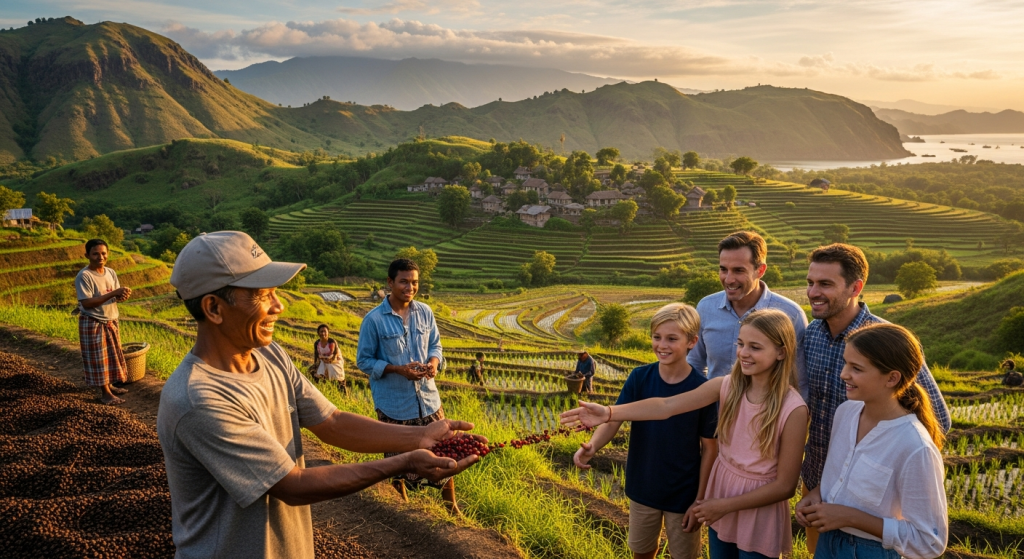
The Manggarai highlands of Flores are renowned for their distinct coffee, primarily Arabica and Robusta varieties grown at altitudes ranging from 1,000 to 1,600 meters above sea level. Our agrotourism experiences provide direct access to this agricultural process. Guests join local farmers in the coffee plantations, learning the intricacies of selective hand-picking, a method ensuring only ripe, red cherries are harvested. The coffee season typically runs from May to September, with peak harvesting in July and August. A single coffee tree, on average, yields about 0.5 kilograms of roasted beans per year. Following harvest, the cherries undergo various processing methods: wet-hulled (Giling Basah), fully washed, or natural. Visitors participate in pulping, fermentation, washing, and sun-drying the beans on elevated bamboo mats.
In villages near Ruteng, such as Cancar and Poco Ranaka, guests observe and assist in the roasting process. Traditional methods often involve roasting beans over an open wood fire in a large wok, imparting a unique smoky flavor profile. The aroma of freshly roasted coffee fills the air, a sensory marker of the Manggarai morning. Coffee tasting sessions follow, where different roasts and brewing methods are explored, from local unfiltered brews to more refined pour-overs. This direct engagement fosters an appreciation for the labor-intensive journey from bean to cup. Many Manggarai coffee farms are organically certified, adhering to strict environmental standards, and several operate under Fair Trade principles, ensuring farmers receive equitable prices for their produce, often 20-30% above market rates. A typical 3-day coffee farm stay starts at IDR 3,500,000 (approximately USD 235), including accommodation, meals, and guided activities.
Traditional Weaving: Sikka and Manggarai Ikat Artistry
Flores is a vibrant center for traditional textile artistry, particularly the intricate craft of ikat weaving. This ancient technique, practiced by women across the island, is a cornerstone of Manggarai and Sikka culture. Ikat involves resist-dyeing threads before weaving, creating patterns that emerge as the fabric is constructed. Our programs connect travelers with master weavers in villages like Todo in Manggarai, or the more distant Sikka villages on the eastern part of Flores, such as Maumere, where distinct patterns and motifs persist. Learning about ikat begins with understanding the raw materials: cotton threads, traditionally hand-spun, and natural dyes derived from plants. Indigofera tinctoria produces deep blues, Morinda citrifolia yields reds and browns, and turmeric provides vibrant yellows. The process of preparing these dyes can take several days to weeks.
Guests are invited into the weaving houses, often communal spaces, where the rhythmic clack of looms fills the air. Here, women demonstrate each stage: stretching the threads on a frame, meticulously tying specific sections with palm fiber or plastic strips to resist dye penetration, and then dyeing the bundles. This tying and dyeing process is repeated multiple times for multi-colored designs. Finally, the dyed threads are carefully loaded onto a backstrap loom (alat tenun gedog). Weavers spend weeks, sometimes months, creating a single piece of ikat, with intricate patterns holding cultural significance, often depicting ancestral stories, local flora, or spiritual symbols. A small ikat scarf can take 3-5 days to weave, while a full sarong may require 3-6 months. Purchasing a hand-woven ikat directly supports these artisans, with prices for a medium-sized piece starting from IDR 750,000 (approximately USD 50). This direct connection bypasses intermediaries, ensuring a larger portion of the sale reaches the weaver. Learn more about regional weaving traditions at Wikipedia’s Ikat page.
Rice Terraces and Farm Life: Sustenance in the Highlands
The agricultural backbone of Flores extends beyond coffee to its expansive rice terraces, particularly the unique spiderweb rice fields (Lodok) near Cancar, Manggarai. These fields are not just picturesque landscapes but vital food sources, meticulously managed by local communities using traditional farming techniques passed down through generations. Travelers participate in the seasonal cycles of rice cultivation, from planting young seedlings in flooded paddies (typically October to March) to harvesting the mature grains (April to September). The soil in these regions is naturally fertile, benefiting from volcanic ash deposits from active volcanoes like Mount Inerie. A single hectare of rice paddy can yield up to 5-6 tons of rice per harvest, providing sustenance for numerous families.
Farm stays include opportunities to assist in daily tasks, such as tending to vegetable gardens that grow alongside the rice fields. These gardens provide staples like corn, cassava, sweet potatoes, and various local greens. Guests learn about the traditional irrigation systems, often gravity-fed from mountain springs, which are crucial for maintaining the delicate balance of the rice paddies. Children often join their parents in the fields, learning the rhythms of agricultural life from an early age. The experience offers a tangible connection to the food system, highlighting the sustainable practices that have fed these communities for centuries. Meal preparation often involves ingredients harvested directly from the surrounding farms, offering fresh, seasonal flavors. This immersion provides perspective on the Manggarai people’s deep connection to their land and their self-sufficient way of life, a stark contrast to urban environments.
Community Immersion: Living with Manggarai Families
The core of Komodo Agrotourism lies in its authentic community immersion. This is not merely a tour; it is an invitation into the homes and lives of Manggarai families. Accommodation is typically in traditional homestays, offering a firsthand glimpse into local architecture and daily routines. In villages like Wae Rebo, a UNESCO World Heritage cultural site, guests stay in the iconic cone-shaped Mbaru Niang houses, sharing communal spaces and meals. These houses, approximately 15 meters high, can accommodate up to eight families. The journey to Wae Rebo itself is an adventure, involving a 3-hour trek through dense rainforest from the village of Denge, covering about 7 kilometers with an elevation gain of 700 meters. The village maintains a strict visitor protocol, emphasizing respect for local customs and traditions.
Guests participate in daily activities: cooking traditional Manggarai dishes, learning basic Bahasa Indonesia phrases, or simply sharing stories over a cup of local coffee. Meals are prepared by host families, featuring fresh, local ingredients such as taro, cassava, and various fish or chicken dishes. This direct interaction fosters genuine cultural exchange, allowing travelers to understand the nuances of Manggarai hospitality and social structures. Many families have hosted international guests since 2010, developing a warm and welcoming approach. Children in the villages often greet visitors with curiosity and smiles, providing impromptu language lessons. This form of ethical tourism directly supports the local economy, helping families maintain their traditional way of life and invest in their children’s education. A portion of the homestay fee, for instance, directly funds local school supplies and community health initiatives. For further details on Flores’ cultural sites, visit Indonesia.travel’s Wae Rebo page.
Planning Your Sustainable Farm Stay: Practicalities and Transparency
Booking a Komodo agrotourism experience involves transparency in pricing and a clear outline of what to expect. Our multi-day farm stays are all-inclusive, covering accommodation, all meals, guided activities (coffee harvesting, weaving workshops, farm visits), local transportation from designated meeting points (e.g., Labuan Bajo airport or hotel), and community contributions. We offer various packages, from 3-day coffee farm visits starting at IDR 3,500,000 (approximately USD 235) to 5-day comprehensive Flores cultural and farm tours starting at IDR 6,500,000 (approximately USD 435). These prices are per person and reflect the direct investment back into the communities. Comparison with standard tours often reveals a significant difference: while a typical Komodo National Park boat tour might focus solely on wildlife viewing, Komodo agrotourism prioritizes human connection and cultural exchange.
Our booking process is streamlined through the komodoagrotourism.com website. An online inquiry form allows for customization of itineraries, accommodating specific interests such as a longer focus on traditional weaving or an extended coffee processing experience. Payment options include secure online transfers and major credit cards. We maintain a 24/7 support line for pre-trip inquiries and during-trip assistance. Trust signals are paramount; we display our ethical operator certification prominently and provide testimonials from past travelers, with an average satisfaction rating of 4.8 out of 5 stars from over 300 verified reviews. FAQs regarding packing essentials (light clothing, sturdy walking shoes, insect repellent), local customs (modest dress, asking permission for photos), and health precautions (basic first-aid, travel insurance recommended) are available inline on the booking pages. We recommend booking at least two months in advance, especially for peak seasons (June-August, December-January), to ensure availability with host families.
Discover the true essence of Flores. Engage directly with Manggarai communities, participate in the harvest, learn ancient crafts, and contribute to sustainable livelihoods. Your journey with Komodo Agrotourism is more than a trip; it is a meaningful connection. Visit komodoagrotourism.com to explore our ethical farm-stay options and book your immersive experience today.